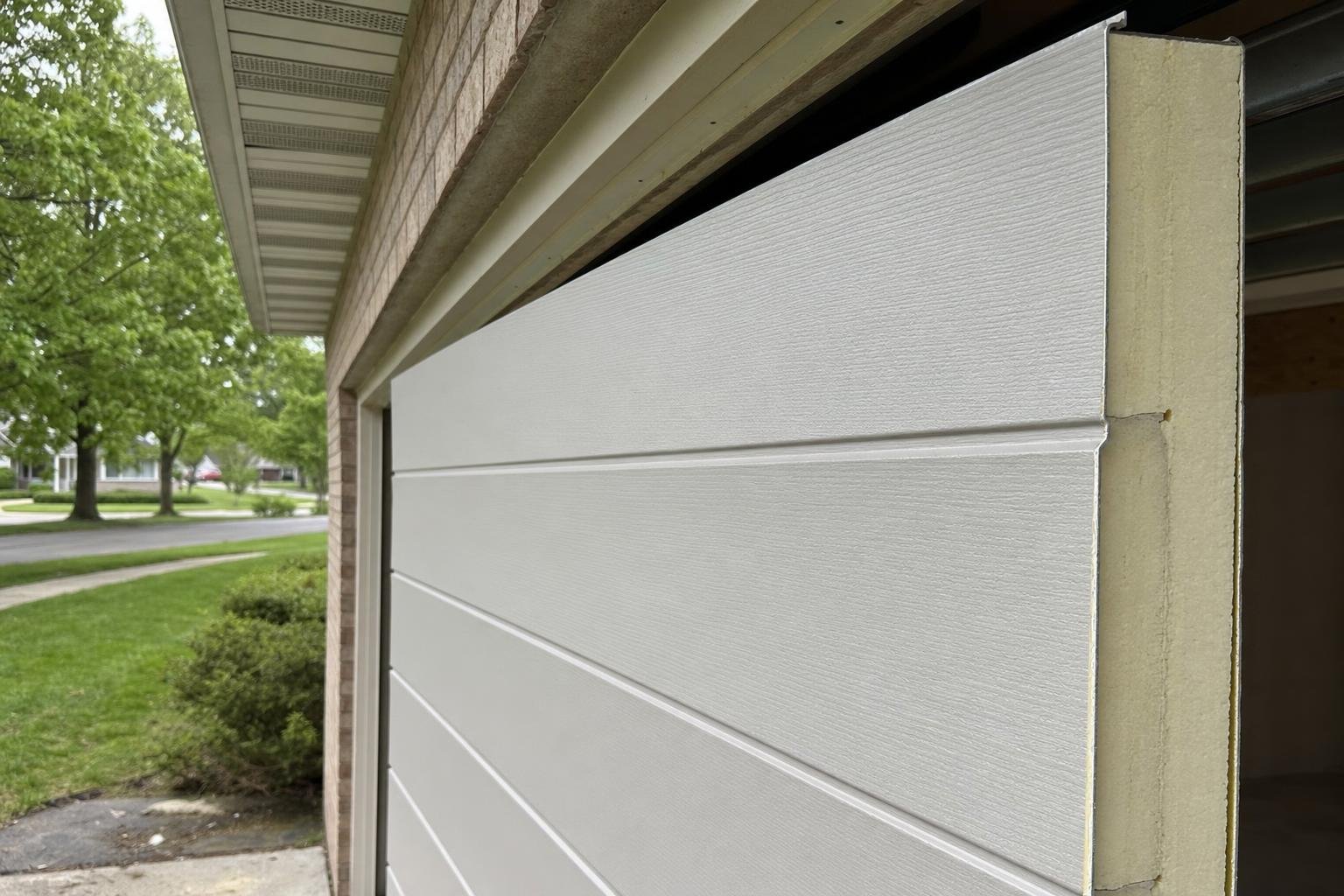
We can't promise coverage, and we won't tell you it's guaranteed when it isn't. Here is how these claims generally go, what to document before you call anyone, and what we do on our end.
Cause decides coverage, not the door
Insurance generally covers sudden, accidental damage. It generally does not cover wear, age, or deferred maintenance. A spring that gives out after years of use is a maintenance expense. A door pushed in by a car, hit by a fallen branch, or knocked out of alignment in a storm is the kind of damage a policy is written for.
The same result, a door that won't open or seal, can be covered or not depending on how it got that way. A door damaged in the tornado that hit south Kokomo has a clear, sudden cause. A door that warped over several wet seasons doesn't.
Read your policy or call your agent before you assume anything. The cause-of-loss language in your policy governs whether a claim pays.
For the hands-on side, see garage door opener repair. Want garage door repair in Kokomo? Our home page covers it.
Kokomo events that tend to matter
Two local events are the ones we'd point to. Wind and flying debris can bend a track or push the frame out of square even when the panels look fine.
If you're near the creek, check around the garage for water damage after high water, and photograph it before anything gets cleaned up or moved.
Slow problems are a different story. Our hot, humid summers and cold zone 5A winters wear on seals and moving hardware, with moisture in one season and freezing in the other. That kind of gradual wear is usually treated as maintenance, not a covered loss.
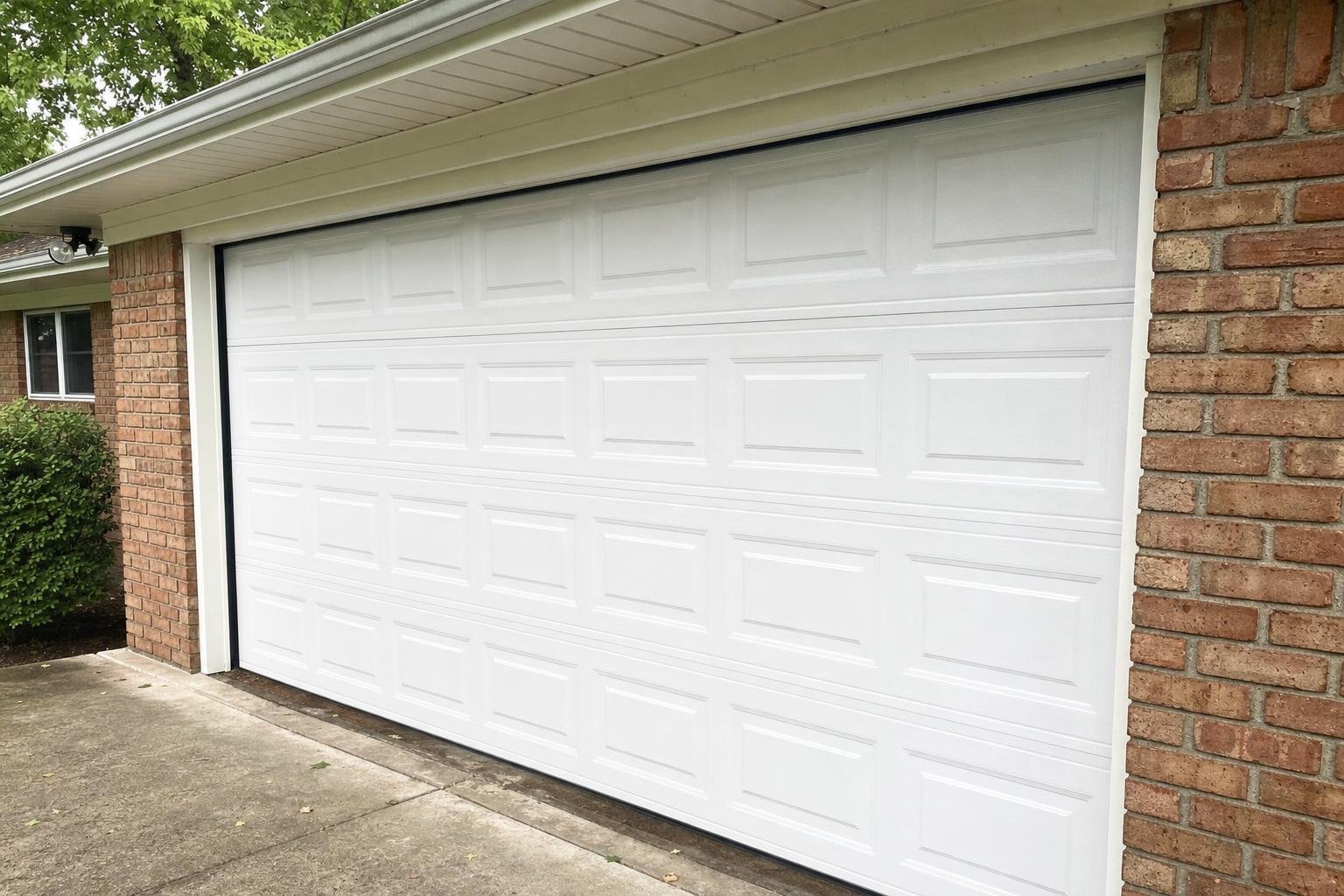
Document before you touch anything
If you think you have a covered claim, photograph the damage before you move the door or attempt a repair. Take wide shots that show the door in the opening and close-ups of the specific damage. Write down the date and the event that caused it. If a vehicle hit the door, get the other driver's insurance information.
Don't force the door to see whether it works if the track looks bent or the door won't stay put. Forcing a door that's out of alignment can make the damage worse and muddy whether it was caused by the event or by what you did afterward. If you have to secure the opening, photograph it first.
What an adjuster looks at
The adjuster decides whether the cause fits a covered peril and whether the damage matches that cause. On a garage door, that means the pattern of damage and the condition of the parts around it.
A mixed case is where claims get argued. If a storm bends the track on a door whose spring was already worn out, the insurer may attribute part of the problem to age. Your agent can tell you how your policy handles that before you file.
What we do, and what it costs
We don't file claims for you and we're not adjusters. Our work is the same whether you're paying out of pocket or going through a claim. We check manual door movement and whether the door stays open and partway open without drifting. We also look at the torsion springs. Then we explain repair or replacement options and get your approval before starting any work.
If you're deciding whether a claim is worth filing, cost matters. Safety sensor repair or replacement typically runs $125 to $275 and so does garage door track replacement. We can give you a typical range on the call, and we confirm the exact number once we've seen the door. Compare that to your deductible before you file. If your insurer has already approved a scope of work and we find damage beyond it, we'll tell you before we proceed so you can take it back to your adjuster.
Fast Scheduling
(765) 776-9896Talk it through with us at (765) 776-9896, no hard sell.
Book a QuoteUpdated October 2026