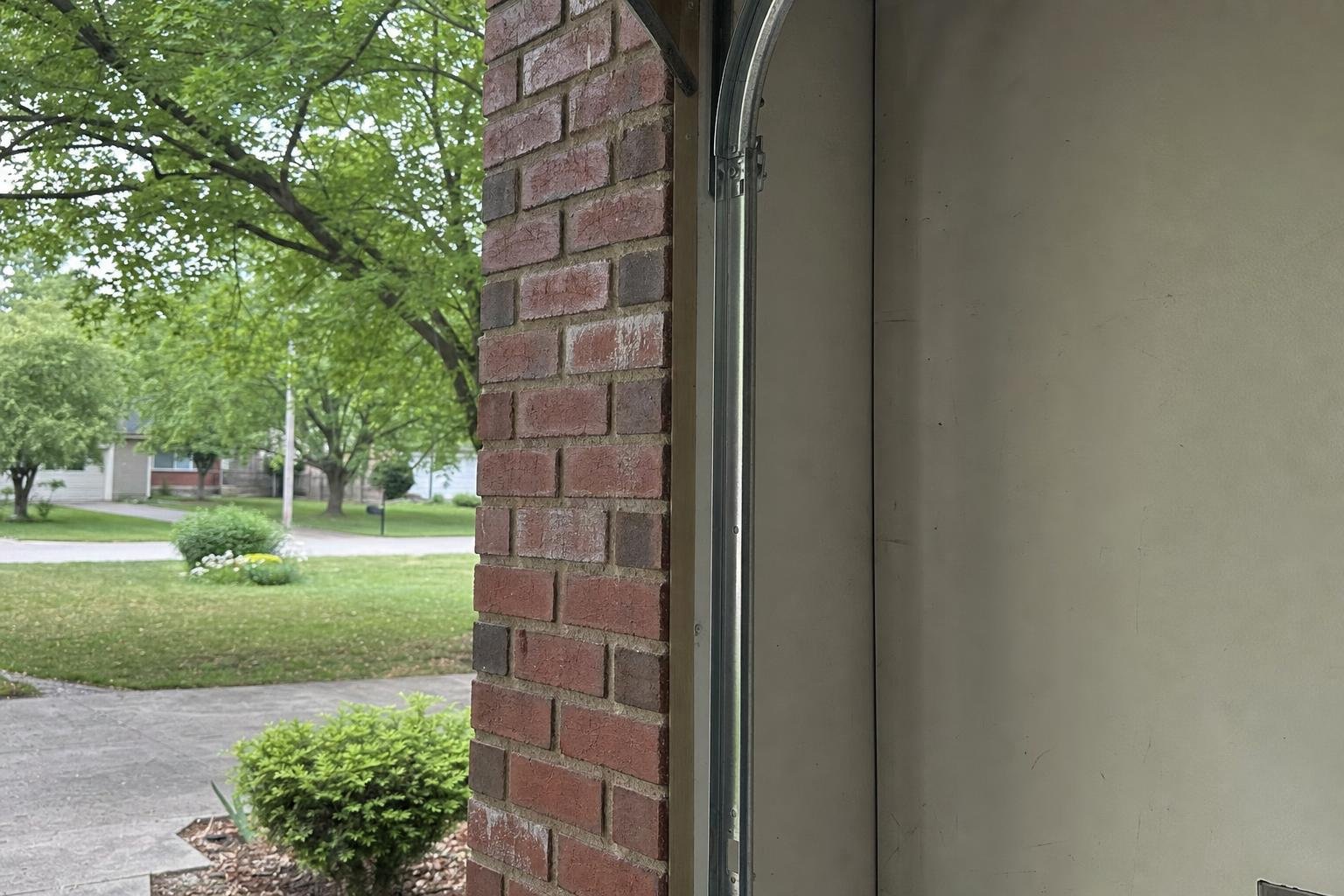
Track realignment and repair puts the door back in the channel it was built to ride in. Binding on one side, an uneven fit in the opening, or fresh scratches on the track wall all send us to the track first.
What you see when the tracks need attention
A door that catches as it goes up or down is the most common sign. You feel it through the handle or hear scraping that isn't the normal roll of the door. It usually happens in the same spot every cycle, because that is where a bent or collapsed section of track grabs the roller.
Look at the gap between the door and the frame with the door closed. If it narrows on one side, or the top edge of the door tilts, the problem is usually in the vertical tracks.
Bright scratches on the inside wall of the track are another sign. They mean a roller is running against metal it shouldn't touch, so the track has shifted or bent since the door last ran clean.
Often paired with garage door panel replacement. Need garage door repair in Kokomo? Start on our home page.
Worth a read: Garage Door Repair Cost Breakdown: Materials, Labor and Extras · Insurance Claims for Garage Door Repair: What to Document
Why tracks go wrong
When a track is knocked out of plumb or bent inward, the roller loses the channel it needs and the door has to fight through a pinch point every cycle.
Impact is the usual cause. A car backing into the door, or a hard bump from inside, can bow a track inward. Brackets that have worked loose over time let the track drift. Our hard winter freezes also drive freeze-thaw cycles that stress foundations and slabs, and a garage that settles or shifts can pull a track out of line without anything ever hitting it.
Water and wind do their own damage. The April Wildcat Creek flood reached nearly 400 homes in Howard County, so if you live near the creek, check around the garage for water damage after high water. Tornadoes have torn up homes and businesses across south Kokomo. After a major storm, look at the door opening and frame for damage or misalignment, because a racked frame will drag the track with it. If you see any of that, call us and we'll check the tracks along with the opening.
What we do when we come out
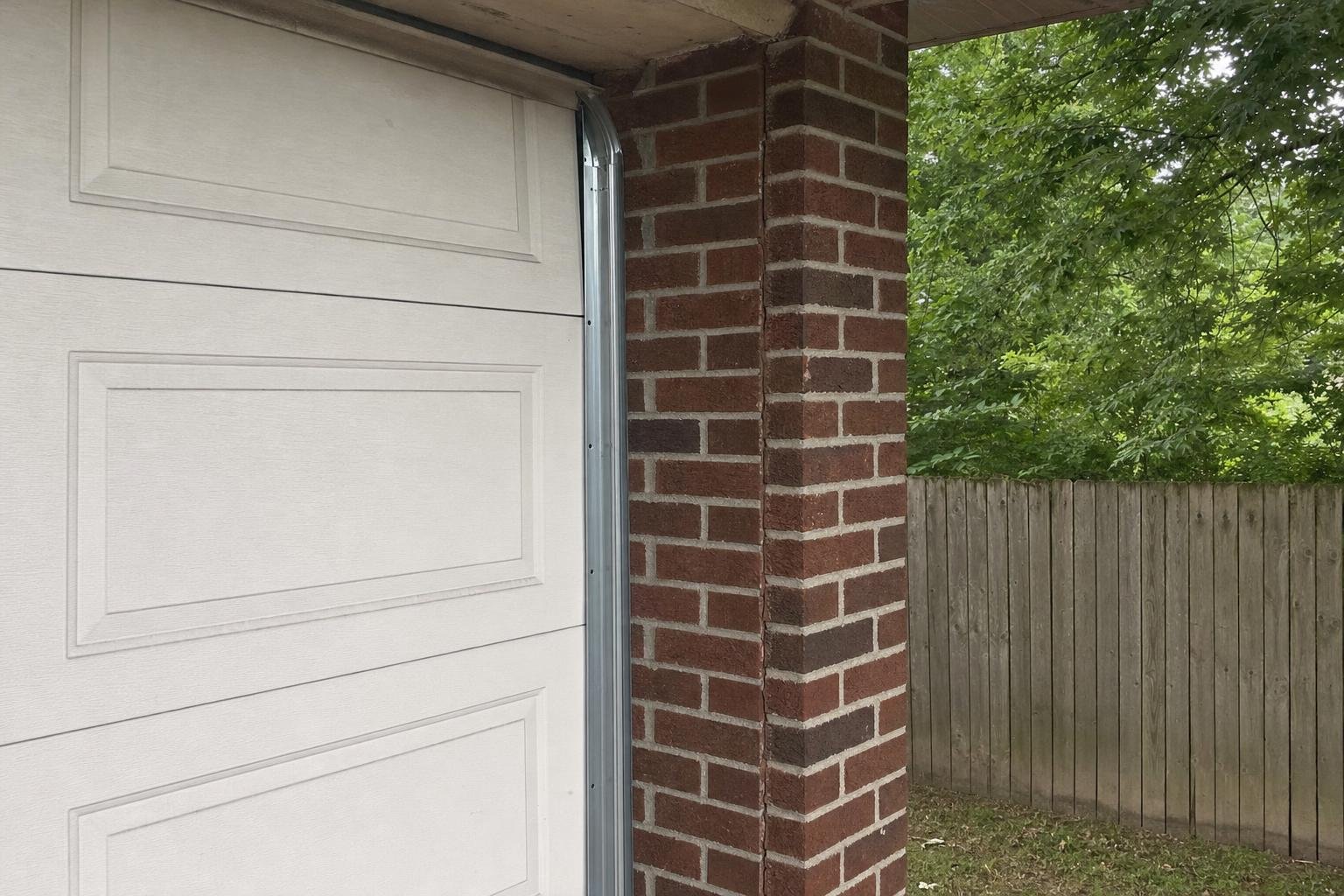
We start by running the door by hand and watching where it binds. That tells us which track is the problem and roughly where. Then we get close and see whether the track itself is bent or the brackets holding it have pulled away from the framing. Those are two different problems with two different fixes.
If the metal is intact but the brackets have loosened, we re-secure the track with track mounting brackets and check that it is plumb top to bottom.
If the track is bent, we first look at whether the roller channel is still open. A minor bend can be tapped back gradually, but only if the channel hasn't collapsed. A severely bent or kinked section gets replaced, not forced back into shape. We tell you which one it is and quote the replacement before we start.
Either way, we retighten the mounting hardware and test the door's travel for smooth movement before we leave.
Equipment we use
A ¼-inch track-to-door spacer sets the gap between track and door, so the rollers sit in the channel without rubbing the track wall. Track mounting brackets hold the vertical track to the framing, and they are what we use to bring a loose track back into plumb.
What the job costs
A single track replacement runs $150 to $275. We can quote a typical range on the call, and we confirm the exact number once we see the track, since it depends on which track it is and how much of it has to come out.
If one side is damaged, we check the other side too. If both tracks need work, we quote the second one separately so you know the number before we touch it. A loose bracket or a minor bend takes less time on site than a section we have to remove and replace.
Straight Answers
(765) 776-9896Talk it through with us at (765) 776-9896, and you'll hear back with a plain answer.
Book a Quote